
Struggling to Control Employee, Contractor and Vendor Access? How Access Control Helps
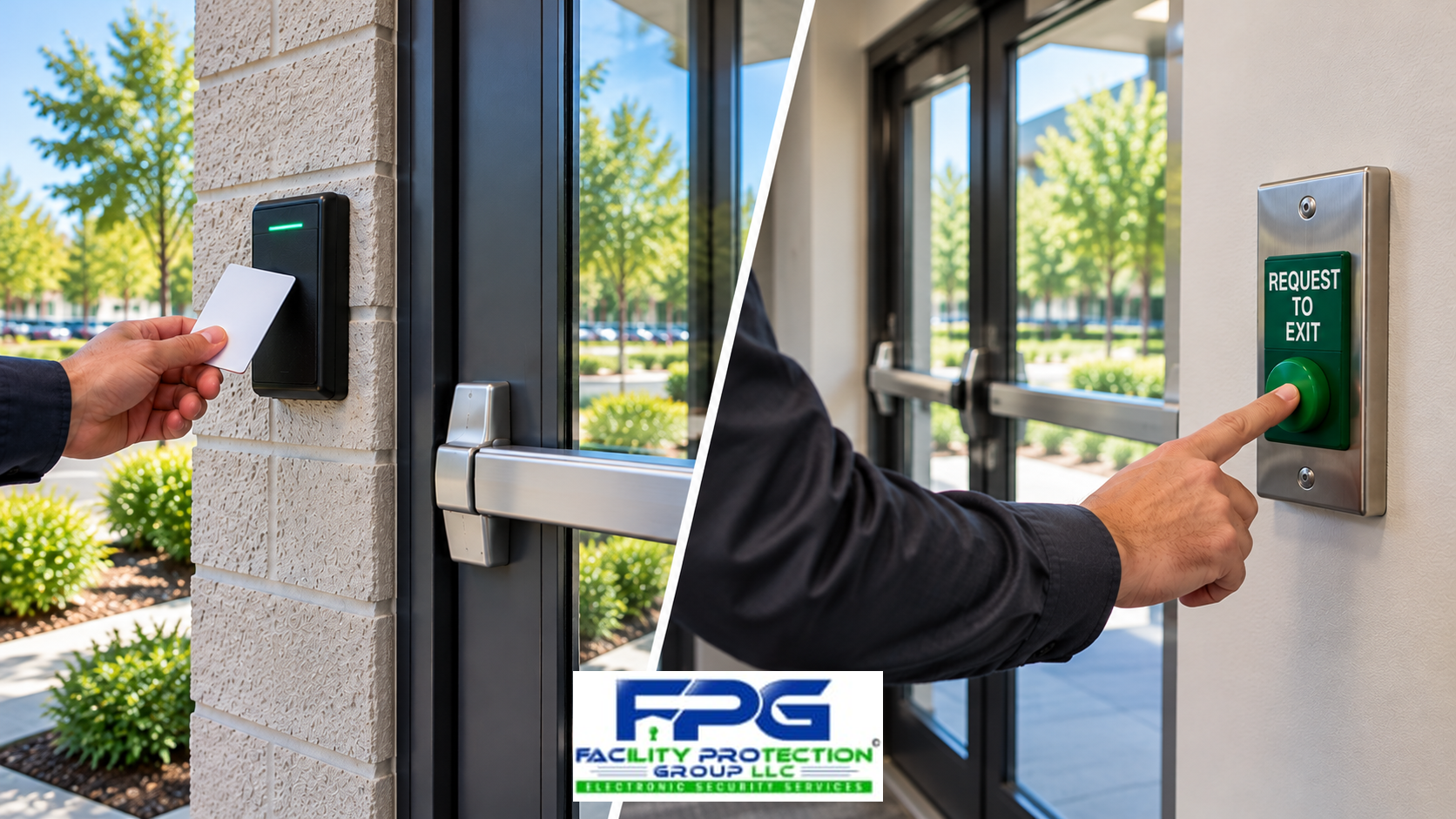
Emergency egress is a critical consideration when businesses install electronic access control systems on commercial doors. While access control helps prevent unauthorized entry, protect restricted areas, and manage who enters a facility, occupants must also be able to leave safely when necessary. A door that restricts unauthorized entry but creates an obstacle during an emergency can expose an organization to serious safety risks and potential code violations.
Consider a commercial building where management wants to restrict access through an exterior entrance. Installing an electronic card reader may provide convenient control over who enters, but the design cannot stop at the reader and locking device. The business must also consider how someone inside the building will open the door, what happens if electrical power fails, and whether the locking arrangement satisfies applicable fire and building requirements.
These concerns become particularly important when electromagnetic locks, electric strikes, electronic panic hardware, and request-to-exit devices are involved. Different locking arrangements operate in different ways, and equipment that works appropriately on one door may be unsuitable for another. An installation must account for the door’s intended function, occupancy classification, required egress provisions, and the applicable code requirements.
For facility managers, the challenge is understanding how security and life safety work together. An access control system should establish appropriate entry permissions without creating unnecessary barriers for people leaving the building. This requires coordination among security integrators, door hardware professionals, building management, and the authorities responsible for reviewing code compliance.
This article explains how commercial properties can balance controlled entry with emergency egress, why different electronic locking methods matter, and what businesses should evaluate before installing or upgrading access-controlled doors.
Table of Contents
- Why Must Access Control Balance Security and Emergency Egress?
- How Do Electronic Locks and Door Hardware Affect Emergency Egress?
- What Role Do Request-to-Exit Devices Play in Access Control?
- What Happens During a Power Failure or Fire Alarm?
- What Building and Fire Code Requirements Apply to Access-Controlled Doors?
- What Common Installation Mistakes Can Compromise Emergency Egress?
- When Should a Business Review Its Access Control and Egress Systems?
Why Must Access Control Balance Security and Emergency Egress?
Commercial security often begins with controlling access to a building. Businesses need to protect employees, customers, equipment, inventory, and sensitive information from unauthorized entry. Electronic access control systems support these objectives by allowing designated personnel to enter using cards, mobile credentials, keypads, or other approved methods. Administrators can assign permissions, change access schedules, and remove credentials when they are no longer needed.
While these capabilities improve entry management, they address only one side of the doorway. People already inside a building must also be able to leave through required exit routes. During a fire, power failure, medical emergency, or other urgent situation, occupants should not encounter a locking arrangement that requires an unavailable credential, complicated instructions, or an electronic authorization process before they can exit.
This distinction is fundamental to commercial door security. Access control generally regulates entry from the secured side of a building or room, while emergency egress concerns the ability of occupants to travel safely toward an exit. In many conventional installations, an electronic reader restricts entry from outside while mechanical door hardware permits occupants to leave from inside without presenting a credential.
However, not every access-controlled door uses a conventional mechanical locking arrangement. Some systems rely on electromagnetic locks, electrically controlled exit hardware, or specialized locking functions. These designs may require additional release methods, monitoring devices, or fire alarm interfaces, depending on the locking configuration and applicable code.
A warehouse provides a useful example. Management may want employees to enter a shipping area only during assigned shifts, using an electronic credential. That requirement can often be addressed through access permissions and appropriate locking hardware. If the same doorway forms part of a required exit route, the system must also preserve the egress operation required for that opening. Restricting entry and permitting exit are related design considerations, but they are not identical functions.
Facility managers should also understand that emergency egress requirements do not depend solely on whether a door is labeled as an emergency exit. A door serving an occupied commercial space may be part of the building’s required means of egress even if it is regularly used for normal employee or visitor movement. Its locking hardware and operating characteristics must therefore be evaluated according to the building’s approved design and applicable requirements.
The International Building Code’s means-of-egress provisions establish general requirements for door operation and address several types of electrically locked egress doors. The applicable edition, local amendments, occupancy conditions, and approvals must be confirmed for each project.
The practical objective is straightforward: a business should be able to control who enters without compromising the ability of occupants to leave as required. Achieving that objective begins with selecting the correct locking arrangement and understanding how the door will operate under normal and emergency conditions.
How Do Electronic Locks and Door Hardware Affect Emergency Egress?
Electronic access control systems can operate several different types of locking hardware. Although these products may serve similar security objectives, their mechanical and electrical characteristics can affect how occupants exit a building. Understanding these differences helps businesses avoid treating all electronically controlled doors as interchangeable.
An electric strike is one common method of controlling entry. Installed in the door frame, an electric strike works with compatible mechanical locking hardware to permit authorized entry when activated. Depending on the selected hardware and configuration, occupants may still be able to operate the inside lever or other approved releasing hardware mechanically. In these arrangements, the access control system manages entry without necessarily controlling the normal egress function.
Electric strikes are available in different operating configurations, including fail-safe and fail-secure models. These terms describe how the electrically controlled component responds to loss of power, but they do not independently establish whether the complete door assembly is suitable for a required exit. The operation of the mechanical lock, the door’s fire rating, and the applicable egress requirements must also be considered.
Electromagnetic locks operate differently. A typical electromagnetic lock uses electrical power to create a magnetic holding force between components mounted at the door and frame. Because the holding force depends on electrical power, removing that power releases the magnetic lock. However, an electromagnetic lock used on a means-of-egress door may require a specific code-permitted release arrangement, and the presence of a request-to-exit button alone does not establish compliance.
Depending on the approved design, release may be associated with door-mounted hardware or an egress-side sensor. Certain sensor-release arrangements require a separate manual unlocking device, appropriate fire alarm interfaces, and automatic unlocking under specified failure conditions. These requirements must be incorporated into the system design rather than added as an afterthought.
Panic hardware and fire exit hardware serve another important function. These devices allow occupants to release a door by operating a horizontal bar or push pad, subject to the requirements for that opening. Panic hardware is required in certain occupancies and conditions, while fire exit hardware is designed for appropriate fire-rated door assemblies where such hardware is required. Adding access control equipment must not interfere with the approved operation of these devices.
For example, an office entrance equipped with a credential reader and compatible electrified panic hardware may allow authorized entry while maintaining the required mechanical exit operation. By contrast, adding an electromagnetic lock to a door without evaluating how its electrical release interacts with the existing panic hardware could create a serious design problem.
Door closers, hinges, latches, exit devices, and other mechanical components also influence the overall performance of an opening. A door that does not latch correctly, binds against its frame, or has damaged releasing hardware may present security and safety concerns even when the electronic access control equipment is functioning normally.
The selection process should therefore begin with the complete door assembly rather than a particular reader or controller. Facility managers and integrators need to understand the door’s construction, existing hardware, required operation, fire rating where applicable, and expected use before selecting an electric strike, electromagnetic lock, electrified exit device, or other locking solution.
Guidance from UL Solutions on access and egress locking configurations reinforces the importance of evaluating complete locking arrangements and their applicable safety requirements.
When the locking method is selected correctly, access control and emergency egress can support one another. Businesses gain better control over authorized entry while occupants retain the means of exit required for the building and the specific door application.
What Role Do Request-to-Exit Devices Play in Access Control?
Request-to-exit devices, commonly called REX devices, allow an access control system to recognize that someone intends to leave a secured area. Depending on the equipment and locking arrangement, a REX device may signal the controller, initiate an authorized door release, or help prevent an ordinary exit from being recorded as a forced-door event. These devices can improve everyday operation, but their role in emergency egress depends on how the complete door system is designed.
Common REX devices include motion sensors, mechanical switches incorporated into door hardware, and wall-mounted push buttons. A motion sensor may detect someone approaching a doorway from the secured side, while a switch inside a lever or exit device may signal that the door is being opened normally. A wall-mounted button provides another method of initiating an exit request, although its function and suitability depend on the locking hardware and applicable requirements.
For example, an employee leaving a restricted office might approach a door equipped with an electromagnetic lock and an approved sensor-release arrangement. The sensor detects movement toward the exit and causes the locking system to release as designed. In another application, an employee may operate an electrified exit device that mechanically permits egress while also communicating an exit event to the access control controller. Although both installations involve electronic security, they do not rely on identical release methods.
It is especially important to distinguish a routine REX button from a manual unlocking device required by the applicable building code. Under certain sensor-release electrically locked egress door provisions, a manual unlocking device must be provided independently of the sensor. Applicable requirements can include specific mounting locations, visible identification, direct interruption of electrical power to the lock, and a prescribed unlocking period.
A push button connected only to an access control controller may not satisfy those requirements. If the controller, software, or communication path fails, the button may no longer provide the required release. Where the code requires direct interruption of locking power, the emergency release circuit must be designed accordingly. The specific requirements depend on the adopted code edition, locking arrangement, occupancy, and approval by the authority having jurisdiction.
REX devices should also be positioned according to their intended purpose. A routine request-to-exit button may be located on an interior wall where occupants can readily use it, but a code-required manual unlocking device may have more restrictive placement requirements. The distance from the door, mounting height, identification, and release function should therefore be established during system design rather than selected solely for convenience.
Facility managers should ask their security integrator to explain exactly what each device does. Does it merely notify the controller that someone is exiting? Does it release an electromagnetic lock? Is the release dependent on software or controller operation? Does it meet a specific code-required emergency unlocking function? These questions help distinguish operational convenience from life-safety performance.
Properly selected request-to-exit equipment can support reliable access control while maintaining the intended door operation. However, a REX device should never be assumed to make an otherwise unsuitable locking arrangement compliant simply because it provides a way to request that the door unlock.
What Happens During a Power Failure or Fire Alarm?
Commercial access control systems depend on electrical equipment, including controllers, power supplies, readers, relays, and electrically operated locking hardware. A power interruption or fire alarm condition can change how these components operate. Businesses must understand those changes before relying on an electronic locking system at a doorway used for emergency egress.
One of the most important distinctions is the difference between fail-safe and fail-secure operation. A fail-safe electrically controlled lock releases when its operating power is removed. A fail-secure electrically controlled lock remains secured when power is removed. Neither term, by itself, determines whether occupants can safely exit through a particular door.
For example, a fail-secure electric strike may continue restricting entry from the outside during a power failure while compatible mechanical hardware allows occupants to exit from the inside. That arrangement can be appropriate in some applications because the electrical locking function does not prevent the required mechanical egress operation. However, the door assembly, hardware listing, fire-rating requirements, and applicable codes must all be considered.
An electromagnetic lock generally requires electrical power to maintain its holding force. Removing that power releases the magnetic lock. For certain electrically locked egress door arrangements, applicable codes require unlocking when specified release devices operate, when particular components lose power, or when designated fire alarm or sprinkler signals are received. The exact requirements are determined by the locking configuration and the governing code provisions.
Backup power introduces another consideration. Batteries or an uninterruptible power supply may keep access control equipment operating during an electrical outage, but maintaining controller operation must not defeat a required unlocking function. If the code requires a locking device to release under a particular condition, the system must be designed so that backup power does not prevent that release.
Fire alarm integration must also be evaluated carefully. Some electrically locked egress configurations require unlocking in response to designated fire alarm or automatic sprinkler system signals, while other permitted configurations have different requirements. It is therefore inaccurate to assume that every electronically controlled door must unlock during every fire alarm or that all locks may remain energized because the building has backup power.
Consider a business with an access-controlled entrance, an interior electromagnetic lock, and a battery-backed power supply. Under normal conditions, authorized credentials control entry and approved release methods permit exit. If the building loses power or an applicable fire alarm signal is activated, the required release sequence must still occur. This may require properly arranged power-interruption circuits, listed equipment, and coordination with the fire alarm contractor.
Testing is essential because the intended sequence of operation may not match the actual installed configuration. An integrator should verify normal credential operation, authorized exit, loss-of-power behavior, required fire alarm interfaces, and restoration of service. Testing should also confirm that mechanical exit hardware continues to function as intended and that the door does not become an unintended obstacle during an emergency.
Facility managers should request documentation describing how each controlled opening behaves under normal conditions, electrical failure, and applicable emergency signals. This information supports maintenance, troubleshooting, future upgrades, and communication with building officials or fire inspectors.
Emergency egress should remain a defined system requirement throughout the design and installation process. It should not depend on an assumption that electronic equipment will always operate normally or that a backup battery automatically resolves every safety concern.
Facility Protection Group can help commercial property owners evaluate access-controlled openings, identify potential conflicts between security objectives and exit requirements, and coordinate appropriate solutions for their facilities. Whether a business is installing a new system or reviewing existing electronic locks, the goal is to establish dependable entry control without overlooking occupant safety. Visit Facility Protection Group to learn more about commercial security solutions and discuss your property’s requirements.
What Building and Fire Code Requirements Apply to Access-Controlled Doors?
Building and fire codes establish requirements for how occupants move through a building and reach an approved exit. These requirements can affect door swing, releasing hardware, locking methods, signage, accessibility, and the use of electrically controlled locks. For commercial properties, access control design must account for these provisions rather than treating door security as an isolated equipment decision.
The International Building Code addresses means of egress in Chapter 10, including requirements for doors and several categories of electrical locking arrangements. The National Fire Protection Association’s NFPA 101, Life Safety Code, also addresses means-of-egress considerations and special locking arrangements where adopted. The provisions that apply to a particular project depend on the jurisdiction, adopted editions, local amendments, occupancy classification, and building conditions.
These codes distinguish between different methods of electrically controlling a door. For example, some permitted arrangements use door-mounted hardware to release an electrical lock, while others rely on an egress-side sensor together with additional required release provisions. Delayed-egress locking systems and certain controlled-egress applications have separate restrictions and are not interchangeable with conventional access-controlled openings.
Occupancy classification is especially important. A small office, healthcare facility, school, warehouse, and assembly space may have different requirements based on how the building is used and how many people occupy it. A locking method permitted in one environment may be prohibited or subject to additional conditions in another.
Door hardware also matters. Certain occupancies and occupant loads require panic hardware or fire exit hardware, and those devices must remain capable of performing their required function. An access control installation should not obstruct the releasing hardware, introduce an unauthorized additional locking operation, or compromise the listing of a fire-rated door assembly.
Accessibility requirements must be considered alongside fire and building codes. Required door hardware must be operable by people with disabilities, and applicable provisions address issues such as operating height, grasping or twisting motions, clearances, and accessible routes. A release button or other control that is convenient for one user may still be unsuitable if its location or operation conflicts with accessibility requirements.
The authority having jurisdiction, commonly referred to as the AHJ, plays a central role in determining compliance. Depending on the location and project, the AHJ may include building officials, fire marshals, or other designated authorities. Their review can help establish whether a proposed locking arrangement is permitted and what documentation, permits, inspections, or testing are required.
Businesses planning an installation should review the applicable International Code Council resources and NFPA codes and standards as starting points for understanding the governing requirements. The adopted local provisions and AHJ determinations remain controlling.
A practical design review should examine the entire opening: the door and frame, mechanical hardware, electronic lock, credential reader, request-to-exit equipment, power supply, required release circuits, and any necessary fire alarm interfaces. This approach helps identify conflicts before equipment is purchased or installed.
For commercial property owners, code compliance is not simply a final inspection item. It is a design responsibility that should influence hardware selection, installation methods, system testing, and long-term maintenance. Addressing these requirements early can reduce costly corrections while supporting both building security and emergency egress.
What Common Installation Mistakes Can Compromise Emergency Egress?
Even when commercial access control equipment is reliable and professionally manufactured, installation decisions can create problems if the complete doorway is not evaluated. A credential reader, electronic lock, and request-to-exit device may function correctly during everyday use while still failing to provide the release operation required for emergency egress. Recognizing common installation mistakes helps facility managers ask better questions before approving new equipment or modifying an existing system.
One common mistake is selecting electronic locking hardware primarily for its security capabilities without considering the door’s required exit function. An electromagnetic lock may provide effective entry control in an appropriate application, but its installation must include the release methods required for that specific locking arrangement. Similarly, an electric strike must be compatible with the mechanical lockset, door construction, and any applicable fire-rating requirements. Choosing equipment without reviewing these factors can result in costly changes or an unsuitable installation.
Another concern is assuming that any request-to-exit button satisfies emergency release requirements. A conventional REX button may send a signal to an access control controller, which then commands a lock to release. That arrangement may be appropriate for routine operation, but it is not necessarily equivalent to a code-required manual unlocking device. Where direct interruption of locking power is required, relying exclusively on a controller-operated release can leave a critical dependency in the exit sequence.
Placement also deserves attention. A wall-mounted request-to-exit button may be convenient for normal building operation, but its location should not be chosen arbitrarily when it performs a required emergency unlocking function. Applicable provisions may specify its mounting height, distance from the door, identification, and method of operation. A button installed several feet away from the opening should therefore be evaluated against the requirements for its actual function rather than assumed to be compliant because it is visible.
Improper coordination with existing door hardware presents another potential problem. Adding electronic locking components to a door equipped with panic hardware, a mechanical latch, or a fire-rated assembly can affect how the opening operates. Modifications should preserve the required releasing function and must not compromise the door assembly’s applicable listing or approval. An access control upgrade should never create an additional operation that occupants must perform before leaving when the governing code prohibits it.
Electrical design mistakes can be less obvious. Backup batteries, power supplies, controller relays, and fire alarm interfaces must work together according to the approved sequence of operation. A system that releases correctly during a routine credential test may behave differently when its controller loses power, a fire alarm signal is received, or a power supply transfers to battery operation. Testing only normal entry and exit does not establish that the required emergency release functions will operate correctly.
Door monitoring and security alarms should also be configured with the intended exit operation in mind. A door contact may report that an opening has been forced or held open, while a request-to-exit input can help distinguish authorized departures from suspicious activity. However, alarm programming must not interfere with the physical ability to exit. A nuisance alarm may be inconvenient, but an electronic control sequence that prevents required egress is a much more serious concern.
These risks often increase when facilities expand or modify existing systems. A building may have older electric strikes, newer electromagnetic locks, multiple access control platforms, and doors that have been altered over time. Equipment added during separate projects may not have been evaluated as one coordinated system. Changes in occupancy, interior layouts, or building use can also affect whether an existing locking arrangement remains appropriate.
For businesses, the most effective way to avoid these mistakes is to treat each access-controlled opening as a complete assembly. The electronic equipment, mechanical hardware, electrical power, emergency release methods, and applicable code requirements must be considered together. This approach supports dependable security while reducing the likelihood that an installation will interfere with safe building evacuation.
When Should a Business Review Its Access Control and Egress Systems?
Commercial access control systems should be reviewed whenever a business installs new electronic locks, changes how a building is occupied, renovates an entrance, or experiences recurring problems with door operation. Periodic evaluations are also valuable because equipment and building conditions can change long after the original installation. A system that met the facility’s needs several years ago may no longer reflect its current security objectives or operational requirements.
A useful assessment begins by identifying which doors are electronically controlled and understanding their purpose. Exterior entrances, employee-only doors, equipment rooms, stairwell openings, and other restricted areas may have different security needs and egress considerations. Facility managers should determine whether each opening is part of a required means of egress and whether its installed hardware supports the required operation.
The assessment should then examine the existing locking method. An electric strike, electromagnetic lock, electrified panic device, or other electronically controlled component should be identified along with its normal operating sequence. The review should establish how occupants exit, what causes the lock to release, and whether the release depends on a reader, controller, motion sensor, push button, or mechanical operation.
Power failure behavior deserves particular attention. Facility managers should understand whether each lock remains secured or releases when electrical power is removed, whether mechanical egress remains available, and how any backup power equipment affects the system. Where applicable, the assessment should also confirm that required fire alarm interfaces and emergency unlocking functions operate as intended.
Physical door conditions are equally important. A misaligned door, damaged latch, failing closer, or improperly adjusted exit device can undermine an otherwise functional electronic security system. An assessment should consider whether doors close and latch correctly, whether required hardware operates without obstruction, and whether modifications have affected fire-rated assemblies or accessibility.
Documentation can make future maintenance more efficient. Businesses benefit from having an accurate record of their access-controlled openings, installed equipment, applicable release arrangements, and system testing procedures. This information can help technicians troubleshoot problems without inadvertently changing an important safety function. It can also support discussions with building officials, fire inspectors, and other professionals involved in facility operations.
Organizations with multiple locations may benefit from establishing consistent review practices. Although individual buildings can have different code requirements and hardware configurations, a coordinated assessment process helps management identify outdated equipment, inconsistent operating procedures, and openings that deserve closer technical attention. Standardized documentation also makes it easier to plan upgrades and prioritize corrective work.
For businesses considering new construction or renovation, reviewing emergency egress requirements early in the project is particularly valuable. Security integrators can coordinate with architects, door hardware suppliers, electrical contractors, and fire alarm professionals before installation begins. This reduces the likelihood of discovering a conflict after doors have been modified, equipment purchased, or wiring completed.
Facility Protection Group approaches commercial security as a coordinated effort involving people, property, equipment, and daily operations. An effective access control system should protect restricted areas while supporting the safe movement of employees and visitors. Businesses can explore related planning considerations through FPG’s commercial security guides, which provide additional information about evaluating facility protection needs.
Ultimately, the objective is not simply to install a card reader or electronic lock. It is to establish a doorway that performs correctly during ordinary business activity and under the emergency conditions addressed by the applicable codes. When security and emergency egress are considered together, organizations can make better decisions about equipment selection, system upgrades, and long-term facility protection.
Protect your facility without overlooking occupant safety. If your business is planning an access control installation, upgrading electronic door locks, or reviewing existing security equipment, Facility Protection Group can help evaluate your operational requirements and coordinate suitable commercial security solutions. Contact Facility Protection Group to discuss your facility’s access control needs and the importance of maintaining appropriate emergency egress provisions.