
Table of Contents
- Executive Context for Education Leaders
- The Evolving Physical Security Landscape in Education
- Layered Security as a Strategic Foundation
- Access Control Strategies for Educational Facilities
- Video Surveillance for Visibility, Safety, and Accountability
- Intrusion Detection and After-Hours Protection
- Communication and Entry Management with Intercom Systems
- Integration: Creating a Cohesive Campus Security Strategy
- The Role of Professional Security Assessments
- Planning for Long-Term Security Sustainability
- Call to Action
- Closing Perspective
Executive Context for Education Leaders
Physical security in educational facilities has become paramount in our ever-changing world. Educational facilities operate in an environment where safety, accessibility, and community expectations all intersect. Schools, colleges, and universities are designed to welcome students, staff, families, and visitors, yet they must also guard against unauthorized access, vandalism, theft, and more serious threats. As a result, physical security has become a strategic responsibility for superintendents, presidents, business officers, and facilities directors.
Many institutions have already moved beyond basic awareness of security risks and are now focused on evaluating practical strategies, technology options, and long-term implementation approaches. The challenge is not simply adding more devices; it is building a coordinated security ecosystem that supports daily operations, compliance requirements, and emergency response protocols.
Organizations such as Facility Protection Group (FPG) work alongside education leaders to design integrated physical security solutions that reflect each campus’s layout, culture, and operational realities, rather than forcing a generic one-size-fits-all model.
To explore how an experienced integrator supports campus-wide protection, visit Facility Protection Group’s electronic security services page.
The Evolving Physical Security Landscape in Education
Educational campuses are fundamentally different from traditional commercial properties. Multiple buildings, open grounds, shared athletic and community spaces, and constantly shifting schedules create a dynamic environment that can be difficult to secure with traditional methods alone. Many facilities are also working within older building designs that were never engineered for today’s security expectations.
At the same time, expectations from parents, boards, regulators, and the broader community have increased. Stakeholders want clear evidence that reasonable steps are being taken to protect people on campus, document incidents accurately, and respond quickly when something goes wrong. This has pushed many institutions to move away from piecemeal upgrades and toward more intentional, campus-wide physical security strategies.
Many education leaders also review guidance from national resources such as the U.S. Department of Education’s school safety and emergency planning materials when developing or updating their physical security plans.
Security Insight:
Effective educational security strategies address the entire campus ecosystem—including buildings, parking areas, walkways, and shared spaces—rather than focusing only on individual entrances
Layered Security as a Strategic Foundation
Layered security is a core principle that helps educational institutions build resilience into their physical protection plans. Instead of relying on a single barrier or technology, a layered strategy combines multiple protective measures that work together to deter, detect, delay, and respond to potential threats.
A typical layered approach physical security in educational facilities might include perimeter awareness, controlled building entry, interior monitoring near critical areas, intrusion detection after hours, and clear communication channels for staff and first responders. When designed as part of a cohesive plan, each layer reinforces the others and reduces the likelihood that a single point of failure will compromise campus safety.
Access Control Strategies for Educational Facilities
Electronic access control systems have become a cornerstone of modern educational security strategies. Rather than relying on traditional metal keys that are easily lost, copied, or shared, electronic credentials and readers allow administrators to manage who can enter specific buildings, rooms, or zones—and when.
In practical terms, this means staff and authorized personnel can be granted role-based access, while visitors are routed through clearly identified entry points. Schedules can be aligned with class times, after-school programs, and special events. When necessary, campuses can also initiate secure entry procedures or lockdown protocols using the same access control infrastructure.
Well-designed access control systems also improve accountability by generating reliable audit trails that show when doors were accessed and by whom. This information is invaluable when reviewing incidents, addressing policy violations, or refining procedures.
Operational Benefit:
Electronic access control reduces key management challenges, provides detailed activity logs, and supports faster decision-making during both routine operations and emergencies.
Video Surveillance for Visibility, Safety, and Accountability
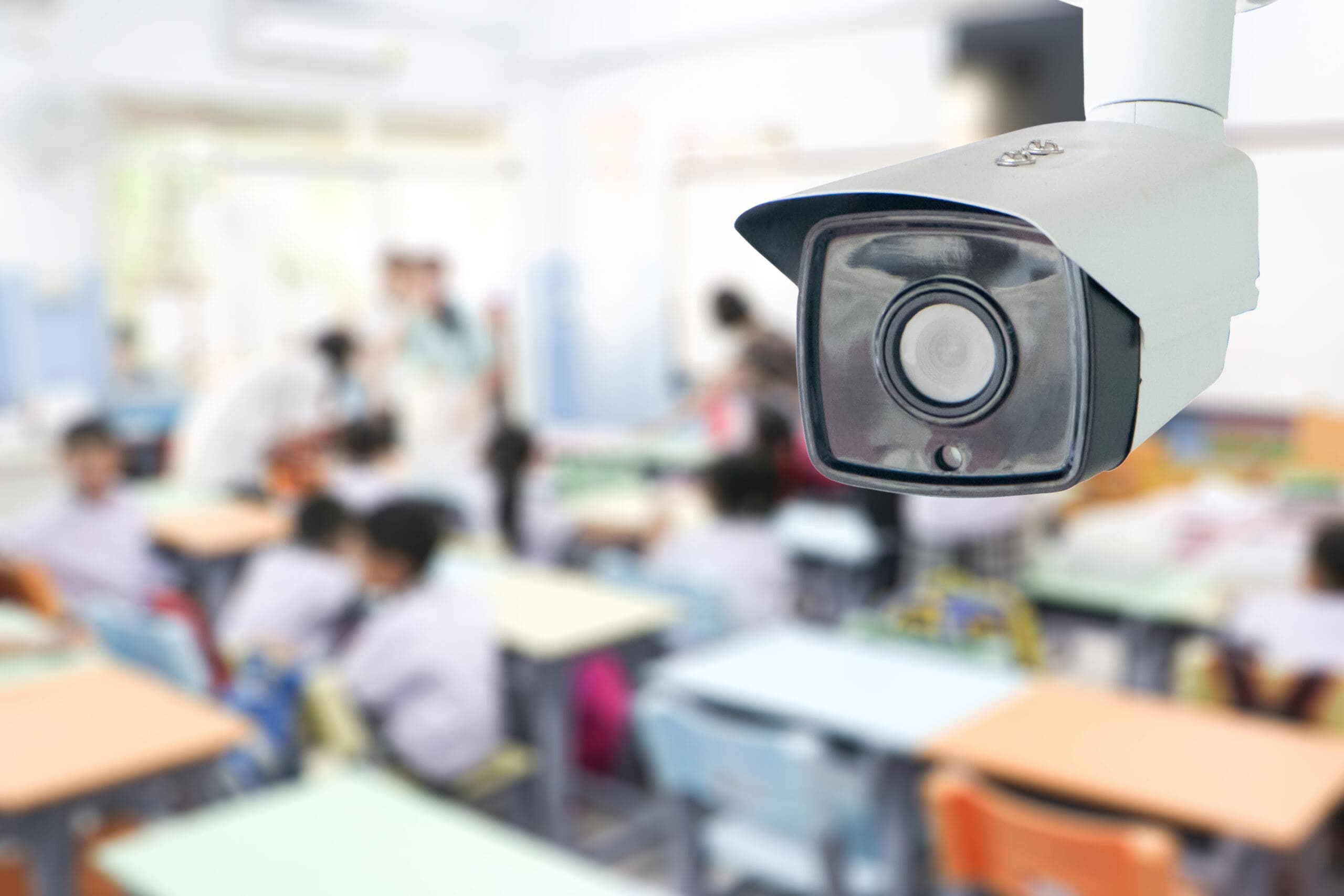
Video surveillance is another critical pillar of comprehensive physical security in educational facilities. When thoughtfully deployed, modern camera systems provide real-time visibility across key areas of campus, help deter unwanted behavior, and support accurate incident reconstruction.
Strategic camera placement often focuses on building entrances, main corridors, common areas, parking lots, athletic facilities, and other locations where people naturally gather or move. The goal is not to monitor every square foot, but to provide meaningful coverage where it will deliver the greatest safety and accountability benefits.
Integrating video surveillance with access control and intrusion detection further enhances situational awareness. For example, when a door is forced open after hours, the associated camera feed can be automatically flagged for review, helping staff or monitoring partners quickly understand what is happening.
Intrusion Detection and After-Hours Protection
While schools and campuses are bustling during the day, many security incidents occur during evenings, weekends, and holiday breaks. Intrusion detection systems are designed to protect facilities during these low-occupancy periods by monitoring doors, windows, and interior zones for unauthorized movement.
Zoned system design allows different parts of campus to be armed or disarmed according to use. For instance, a gymnasium hosting a community event can remain active while classroom wings and administrative offices stay secure. When intrusion alarms are combined with professional monitoring or well-defined internal response plans, institutions can react more quickly and reduce the potential impact of a break-in or vandalism event.
Communication and Entry Management with Intercom Systems
Audio and video intercom systems provide an important communication bridge at controlled entry points. Rather than leaving doors unlocked or relying on ad hoc procedures, staff can visually and verbally verify visitors before granting access to buildings or sensitive areas.
In educational settings, intercoms are especially valuable at main entrances, administrative offices, and service doors. They support better visitor management, streamline delivery coordination, and reinforce a culture of intentional, managed access without creating an unwelcoming atmosphere.
Integration: Creating a Cohesive Campus Security Strategy
As educational institutions add or upgrade systems over time, integration becomes essential. Disconnected technologies may function independently, but they often create blind spots, duplicate data entry, and fragmented response workflows. A cohesive campus security strategy relies on systems that work together, sharing relevant information when it matters most.
Integrated platforms allow access control, video surveillance, intrusion detection, and intercom systems to be managed from unified interfaces or dashboards. This gives security teams and administrators a clearer view of what is happening across campus, reduces training complexity for staff, and supports faster, more coordinated responses during incidents.
Strategic Consideration:
System integration transforms individual security tools into a coordinated campus protection strategy, making it easier to manage risk and communicate clearly during critical events.
The Role of Professional Security Assessments
Professional security assessments give education leaders a structured way to understand physical security in educational facilities from a fresh perspective, including where they stand today and what improvements will make the most meaningful impact. During an assessment, experienced security professionals review campus layout, existing systems, traffic patterns, and current policies.
The output is typically a prioritized set of recommendations that balance risk reduction, budget realities, and implementation timelines. This helps institutions move away from reactive upgrades and toward proactive, long-term planning.
Planning for Long-Term Security Sustainability
Enhancing physical security in educational facilities is not a one-time project. Campuses evolve as programs change, buildings are renovated, and technology advances. Sustainable security planning acknowledges this reality and emphasizes scalable platforms, clear governance, and ongoing support.
Working with a qualified systems integrator allows schools and universities to phase in improvements over time, aligning projects with budget cycles and minimizing disruption. It also ensures that new investments build on, rather than conflict with, existing infrastructure.
Call to Action
For education leaders, the next step is often to translate ideas into a clear, actionable roadmap. Conducting a campus security review, identifying priority areas, and engaging a trusted integration partner can provide the clarity needed to move forward with confidence.
Closing Perspective
Comprehensive physical security in educational facilities is achieved through thoughtful planning, layered technology, and ongoing collaboration. By focusing on campus-wide strategies—rather than isolated fixes—schools, colleges, and universities can create environments that are safer, more resilient, and better prepared for the unexpected.
Facility Protection Group (FPG) partners with educational institutions across the Southeast to design, install, and support integrated security systems that align with each campus’s mission and operational requirements.
Facility Protection Group
Website – https://facprogroup.com/
Free Consultation Contact – https://facprogroup.com/contact-us/#
Phone –
Electronic Security Services
Florida State Certified #EF0001201
Serving FL, AL, GA, TN, NC, SC