
Introduction
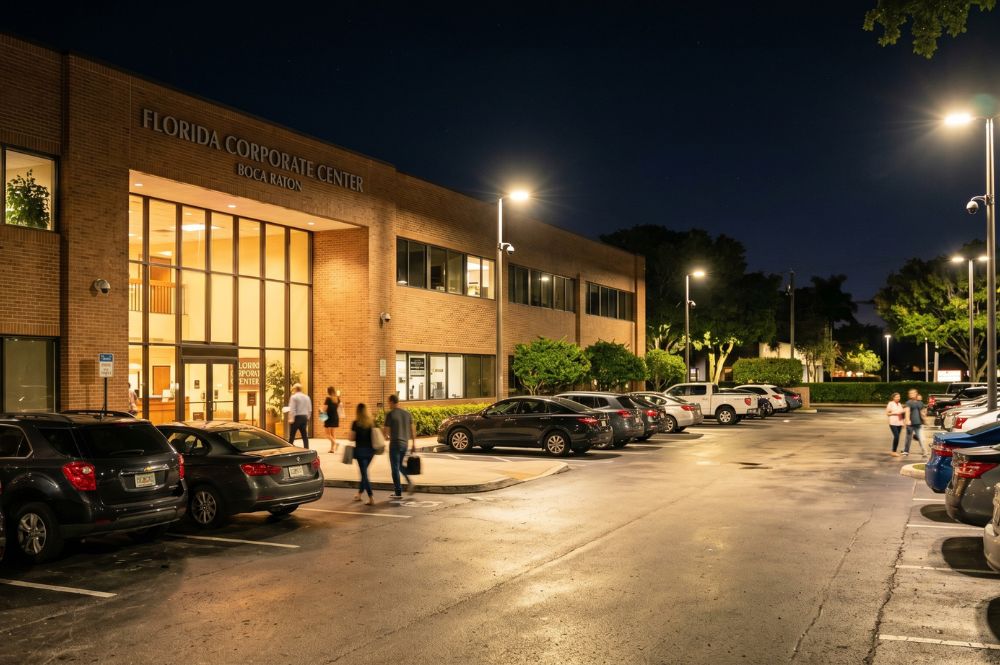
Lighting for video surveillance performance is one of the most critical—and most overlooked—factors in determining whether a security system captures usable footage. While many businesses focus on camera specifications such as resolution and storage, the reality is that even the most advanced system will fail without proper lighting conditions.
Video surveillance systems rely on light to capture usable footage. Poor lighting can create blind spots, reduce image clarity, and introduce distortions that make it difficult to identify people, vehicles, or events. In many cases, lighting issues are not caused by a lack of illumination, but by how light interacts with the environment and the camera itself.
Understanding how lighting impacts surveillance performance is essential for designing systems that deliver reliable visibility in real-world conditions.
Key Highlights
- Lighting is a critical factor in video surveillance performance and image clarity
- Effective systems work with existing light conditions—not against them
- Poor lighting can create glare, backlighting, and blind spots that reduce visibility
- Infrared (IR) lighting enables night surveillance but must be properly designed
- Camera placement and lighting strategy must be aligned for consistent coverage
- Real-world environments require thoughtful lighting design to ensure reliable footage
How Lighting Affects Video Surveillance Performance
Proper lighting for video surveillance performance ensures cameras capture clear, consistent footage across varying conditions. Without consistent and well-positioned illumination, even high-resolution cameras struggle to produce usable footage.
Key impacts of lighting include:
- Image clarity: Insufficient or uneven lighting reduces detail and sharpness
- Contrast and exposure: Poor lighting can wash out subjects or create overly dark areas
- Camera performance: Sensors rely on adequate light to reduce noise and distortion
- Detection accuracy: Low visibility environments make it harder to identify people or objects
When lighting is properly accounted for, cameras can capture clear, consistent footage that supports both real-time monitoring and post-incident investigation.
Designing Around Lighting Conditions (Not Just Adding Light)
In many commercial environments, the challenge is not a lack of light—it is how that light interacts with camera placement.
For example, facilities with large glass windows, open entrances, or exterior-facing lobbies often create strong backlighting conditions. When cameras are positioned inside facing outward, the bright exterior light can overwhelm the camera sensor, causing subjects inside the frame to appear dark or completely unidentifiable.
In these situations, simply adding more lighting does not solve the problem. Instead, the correct approach is to design the system to work with the existing lighting conditions. This may involve repositioning cameras to face into the building, allowing them to harness natural light rather than compete against it.
This principle—working with light rather than compensating for it—is a critical factor in successful surveillance design. Proper camera placement, orientation, and environmental awareness often have a greater impact on performance than adding additional lighting fixtures.
Understanding IR Lighting in Video Surveillance
Infrared (IR) lighting allows security cameras to capture footage in low-light or completely dark environments, making it a critical component of modern video surveillance systems.
Unlike traditional lighting, IR illumination is invisible to the human eye but detectable by camera sensors equipped with night vision capabilities. Most commercial security cameras include built-in IR LEDs that automatically activate when ambient light drops below a certain threshold.
However, built-in IR has limitations. Range is often restricted, and objects positioned too close to the camera can become overexposed, creating a washed-out image. Environmental factors such as reflective surfaces or dirty lenses can further degrade performance.
For larger areas or higher-performance requirements, external IR illuminators may be necessary to provide consistent and controlled coverage. Understanding how IR lighting works—and where it falls short—is essential for ensuring reliable surveillance in nighttime or low-light conditions.
Common Lighting Challenges in Commercial Environments
Many surveillance systems underperform because lighting conditions are not properly accounted for during design.
Common challenges include:
- Backlighting: Bright light sources behind a subject create silhouettes and reduce visibility
- Glare and reflections: Glass, metal, and polished surfaces can distort images
- Uneven illumination: Bright and dark areas within the same frame reduce image quality
- Low-light conditions: Insufficient lighting leads to noise and loss of detail
- Environmental factors: Dirt, weather, and aging fixtures can impact performance over time
Identifying and addressing these challenges during system design is critical for achieving consistent results.
Best Practices for Optimizing Surveillance Lighting
Effective surveillance lighting requires a strategic approach that considers both the environment and the technology being used.
Key best practices include:
- Design lighting for video surveillance performance by aligning camera placement with existing light sources, not against them
- Eliminate shadows and blind spots by ensuring consistent illumination across the coverage area
- Avoid over lighting, which can cause glare and reduce camera effectiveness
- Match lighting to camera capabilities, including resolution, sensor sensitivity, and IR range
- Use supplemental lighting when necessary, particularly in large or complex environments
- Test systems during actual operating conditions, especially at night
These practices help ensure that lighting supports surveillance performance rather than limiting it.
How Lighting Fits into a Complete Security Strategy
Lighting is not a standalone component—it plays a critical role in the overall effectiveness of a security system.
When properly integrated, lighting works alongside:
- Video surveillance cameras
- Access control systems
- Intrusion detection systems
This coordination improves visibility, enhances detection, and strengthens overall security performance.
For a deeper understanding of how these systems work together, read our article on why video surveillance systems are essential for business security.
Is Your Surveillance System Performing as Expected in All Lighting Conditions?
Many systems appear effective during the day but fail to deliver usable footage at night or in challenging lighting environments. Issues such as backlighting, glare, and poor IR performance often go unnoticed until an incident occurs.
Explore Our Video Surveillance Solutions →
Closing
Lighting is one of the most influential factors in determining whether a video surveillance system succeeds or fails. While many businesses focus on camera specifications, real-world performance is often dictated by how well lighting conditions are understood and addressed.
By designing systems that work with existing light, accounting for environmental challenges, and properly leveraging technologies like infrared illumination, businesses can significantly improve visibility, reduce risk, and ensure reliable surveillance performance.
For a comprehensive overview of system design, camera types, and implementation strategies, explore our commercial video surveillance guide.
For a comprehensive overview of system design, camera types, and implementation strategies, explore our commercial video surveillance guide.
Learn more at https://facprogroup.com/ or call 877-762-6460.