
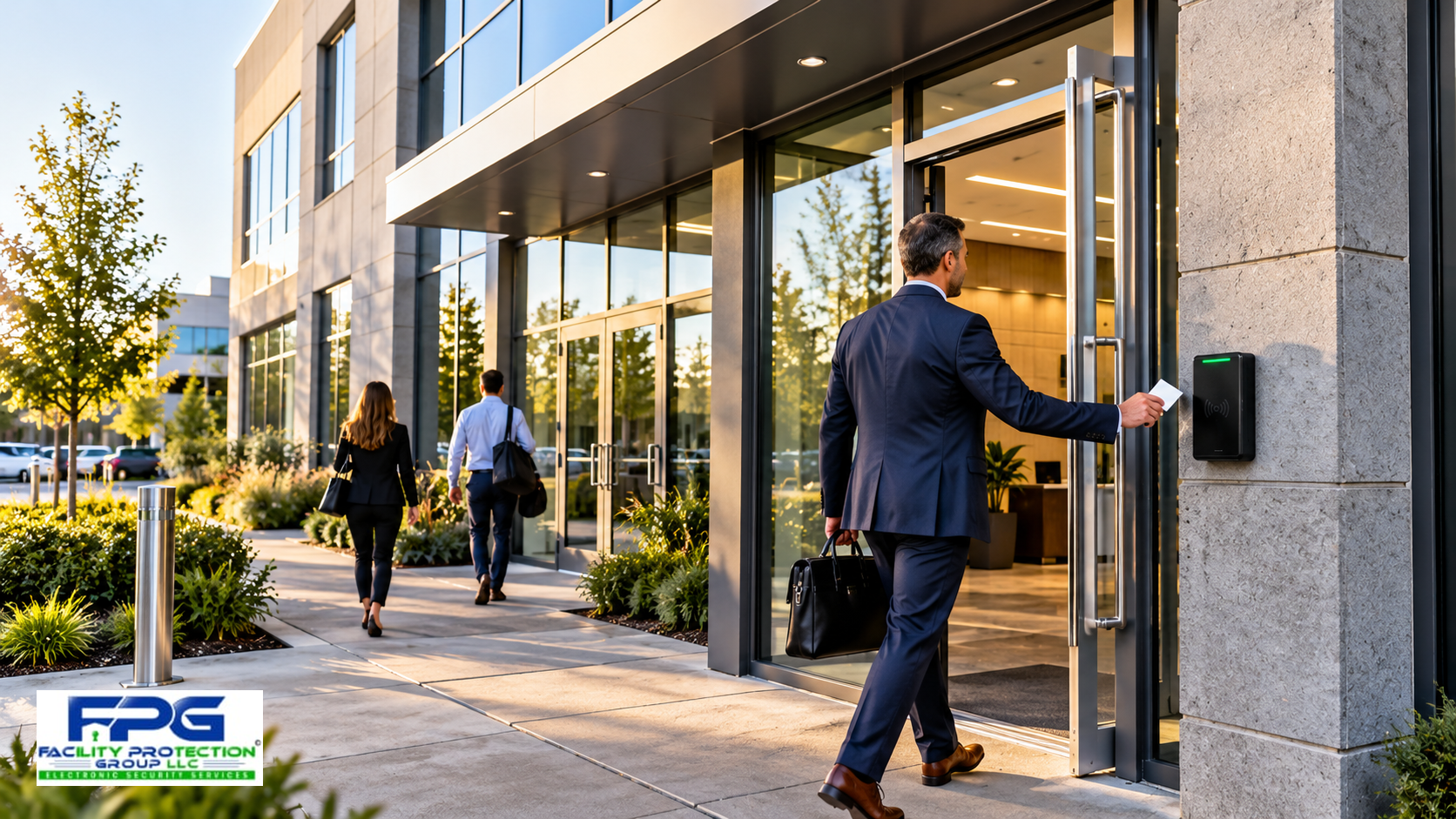
Commercial access control installation gives businesses a practical way to address unauthorized entry, lost keys, inconsistent employee permissions, and the challenge of managing visitors and contractors. The security needs of a commercial building depend on how the property operates. An office lobby may welcome visitors throughout the day, while a warehouse loading entrance must accommodate deliveries without giving drivers unrestricted access to the building. A healthcare facility may need to separate public areas from treatment rooms, and a manufacturing plant may have equipment and inventory that only designated employees should access.
These different environments share an important challenge: protecting entrances without creating unnecessary obstacles for employees, customers, and approved visitors. Traditional keys, shared door codes, and informal entry procedures often become difficult to manage as organizations grow. A professionally designed electronic access control system provides a more structured approach through assigned credentials, defined permissions, and records of entry activity.
The objective is not simply to install card readers on doors. It is to understand where access problems occur, how those problems affect security and daily operations, and which improvements will provide meaningful protection. The following five building entry problems illustrate how access control can help organizations manage their facilities more effectively.
Table of Contents
Five Building Entry Problems Commercial Access Control Installation Can Help Solve
Access problems do not always begin with a serious security incident. Sometimes they appear as routine frustrations: a former employee still has a building key, a contractor cannot enter an approved work area without assistance, or a delivery driver walks into an employee-only hallway looking for someone to help. These situations can reveal weaknesses in a facility’s entry procedures, even when no immediate loss has occurred.
Commercial access control installation can address these concerns by establishing appropriate entry permissions for different people, doors, and schedules. However, equipment alone does not solve every problem. Effective protection requires an understanding of how people move through the property and where existing procedures create unnecessary risk.
1. Unauthorized Visitors Entering Employee-Only Areas
A commercial building may have a welcoming public entrance but limited separation between reception areas and employee workspaces. Visitors can unintentionally enter offices, storage rooms, or other locations where they have no legitimate reason to be. In facilities handling sensitive information, valuable inventory, or specialized equipment, uncontrolled movement creates opportunities for theft, disruption, and unauthorized access.
Electronic access control helps establish clear boundaries between public and restricted spaces. Authorized employees can use assigned credentials to enter designated areas, while visitors follow a defined check-in or escorted-entry process. Where appropriate, a video intercom or visitor management system can provide additional verification before entry is granted. The intended outcome is a more consistent security process that still allows employees and approved guests to move through the building efficiently.
2. Lost Keys and Employee Access That Is Difficult to Manage
Physical keys become increasingly difficult to manage when employees change departments, leave the organization, or work across multiple locations. A missing key may require replacing or rekeying locks, while a shared PIN can remain in circulation long after an employee’s access should have ended. Facility managers may also struggle to determine which individuals retain permission to enter sensitive areas.
A professionally configured access control system allows authorized administrators to assign, modify, and revoke electronic credentials according to employee responsibilities. When someone leaves the organization, their credential can be disabled without collecting every physical key. Permissions can also be adjusted when employees transfer departments or require temporary access to another building.
These capabilities work best when supported by clear administrative procedures and regular reviews of access permissions. Facility managers who want a deeper understanding of credential technologies, controllers, and system planning can consult Facility Protection Group’s Complete Guide to Commercial Access Control.
3. Sensitive Areas That Need Different Levels of Protection
Not every area of a commercial facility requires the same level of protection. A general employee entrance may accommodate dozens of people throughout the day, while an IT equipment room, records department, inventory cage, or medication storage area should be accessible only to authorized personnel. When every employee has the same building access, sensitive spaces may be exposed to unnecessary risk.
A properly designed access control system establishes security zones based on how individual spaces are used. Employees can receive general building access while additional credentials or permissions are required for restricted rooms. Access schedules can further limit entry during evenings, weekends, or periods when certain departments are closed. These controls help protect important assets without unnecessarily interfering with legitimate business activities.
4. Contractors and Vendors Who Need Temporary Access
Commercial properties depend on maintenance technicians, cleaning crews, delivery personnel, and outside contractors. These individuals may need access outside normal business hours, but issuing permanent credentials or sharing door codes can create security concerns. Requiring an employee to unlock every door can also interrupt operations and complicate service schedules.
Many commercial access control platforms allow administrators to establish temporary credentials with specific permissions and expiration dates. A maintenance contractor might receive access to a mechanical room during an approved service window, while a cleaning company could be authorized to enter designated areas during evening hours. Once the assignment ends, those permissions can expire or be revoked. This approach supports accountability while reducing unnecessary interruptions.
5. Limited Visibility Into Who Entered and When
Traditional mechanical keys provide little information about when a particular door was used. If an incident occurs, facility managers may need to reconstruct events through interviews, surveillance footage, or incomplete visitor records. That process becomes more difficult when a property has multiple entrances, changing work shifts, or employees working outside normal business hours.
Electronic access control systems can record credential activity, including the credential presented, the door involved, and the time of the event. Depending on system capabilities, administrators may also receive alerts about doors held open, forced entry, or unusual access attempts. These records can support investigations and help identify recurring operational problems. However, credential activity alone cannot prove that an authorized person entered without someone following behind, which is why video verification and appropriate entry procedures may provide additional protection.
How Do You Know Which Doors Need Access Control?
One of the most important decisions in commercial access control installation is determining which entrances require electronic control. Installing readers on every door may increase project costs without providing meaningful additional protection. However, overlooking a secondary employee entrance, loading dock, or restricted storage area can leave significant security gaps.
A professional facility assessment examines how employees, visitors, contractors, and deliveries move through the property. Main entrances, employee-only doors, loading areas, equipment rooms, and connections between public and restricted spaces may have different security requirements. Door construction, existing locking hardware, accessibility, emergency egress, and network infrastructure also influence equipment selection and installation planning.
The objective is to prioritize entrances according to their security importance and operational requirements rather than treating every opening identically. Facility Protection Group helps organizations evaluate building entry risks and determine where access control improvements can provide the greatest practical benefit.
What Does Professional Installation Actually Involve?
Professional access control installation involves more than mounting a card reader and connecting an electronic lock. The process begins with identifying the facility’s security objectives, examining existing doors and hardware, and determining how the proposed system should operate during normal business activity, power interruptions, and emergencies. A successful installation must balance security with reliable building access and safe emergency egress.
Depending on the project, installation may involve electronic locking hardware, credential readers, door position switches, request-to-exit devices, controllers, power supplies, network connections, and management software. Equipment selection must account for compatibility with existing openings and applicable building, fire, accessibility, and life-safety requirements. Coordination with facility IT personnel and appropriate code authorities may also be necessary.
Once the equipment is installed, technicians must configure and test the system. This includes verifying authorized entry, checking access schedules, confirming door monitoring functions, and ensuring required emergency egress remains available. Administrator training is equally important because even a properly installed system depends on accurate credential management, routine maintenance, and clear operating procedures.
Organizations considering a new system or evaluating an existing installation can learn more about Facility Protection Group’s commercial access control solutions and how professionally planned entry management can support broader facility security objectives.
Concerned about building entry vulnerabilities? Facility Protection Group can help assess your entrances, identify access management weaknesses, and prioritize improvements that fit your operational needs. Contact Facility Protection Group to discuss your security requirements.
Can Access Control Work With Your Existing Security Systems?
Many commercial buildings already have video surveillance, intrusion alarms, intercoms, and other security technologies in place. When planning commercial access control installation, facility managers should consider how a new system can complement these investments rather than operate as an isolated solution. The right approach depends on equipment compatibility, network requirements, and the specific security problems the organization needs to solve.
For example, integrating access control with video surveillance may allow authorized personnel to review camera footage associated with a particular door event. If a credential is presented outside normal business hours, the corresponding video can provide additional context. Video intercoms can help employees verify visitors before granting entry, while compatible intrusion alarm systems may support coordinated monitoring of restricted areas.
Integration does not mean every security system must be replaced or connected through a single platform. Some facilities benefit from centralized event management, while others may operate effectively with separate systems and clearly defined procedures. Facility Protection Group’s Guide to Integrated Security Systems explains how coordinated security technologies can support a broader facility protection strategy.
What Should You Ask Before Choosing an Access Control Installer?
Selecting an access control installer should involve more than comparing equipment prices. A qualified provider should understand the building, the people who use it, and the operational requirements the system must support. Facility managers should ask how prospective installers evaluate entry risks, recommend appropriate door hardware, and establish access permissions for different groups of users.
It is equally important to understand how the system will be managed after installation. Ask whether designated employees can administer credentials, whether remote management is available when needed, and how software updates, maintenance, and technical support will be handled. Organizations with multiple buildings should also discuss whether the proposed platform can accommodate additional doors and locations as their needs change.
Emergency egress, accessibility, and applicable fire and building codes require particular attention. Electrified locking arrangements must be evaluated for each opening and occupancy, with required release and egress functions maintained. The U.S. Access Board’s ADA Accessibility Standards provide authoritative guidance on accessibility requirements. Project-specific compliance should be confirmed with qualified professionals and the appropriate authority having jurisdiction.
A reliable installation provider should explain the proposed system in practical terms, identify potential limitations, and establish clear expectations for testing, training, and ongoing support. The objective is not simply to deliver functioning equipment on installation day, but to provide an access control solution that the organization can manage effectively over time.
Is Commercial Access Control Installation the Right Solution for Your Facility?
Commercial access control installation can provide meaningful benefits when a business struggles with unauthorized entry, unmanaged keys, inconsistent employee permissions, contractor access, or limited visibility into building activity. Electronic credentials, defined access schedules, and properly configured door monitoring can help address these concerns while supporting more consistent security procedures. However, the effectiveness of any system depends on selecting appropriate doors, configuring permissions correctly, and maintaining the equipment after installation.
For some facilities, the immediate priority may be securing a small number of sensitive areas. Others may need to modernize an aging system, coordinate access across several buildings, or integrate entry management with video surveillance and intrusion detection. A thoughtful facility assessment helps distinguish necessary improvements from equipment purchases that offer limited practical value.
Facility Protection Group helps organizations evaluate their security challenges and develop coordinated solutions that reflect how their buildings actually operate. Whether you are considering your first electronic access control system or planning improvements to an existing installation, understanding your facility’s entry risks is the most useful place to begin.
Ready to improve security at your building’s entrances? Contact Facility Protection Group to discuss your access control requirements, identify vulnerable entry points, and explore a practical installation strategy. Connect with Facility Protection Group to begin the conversation.